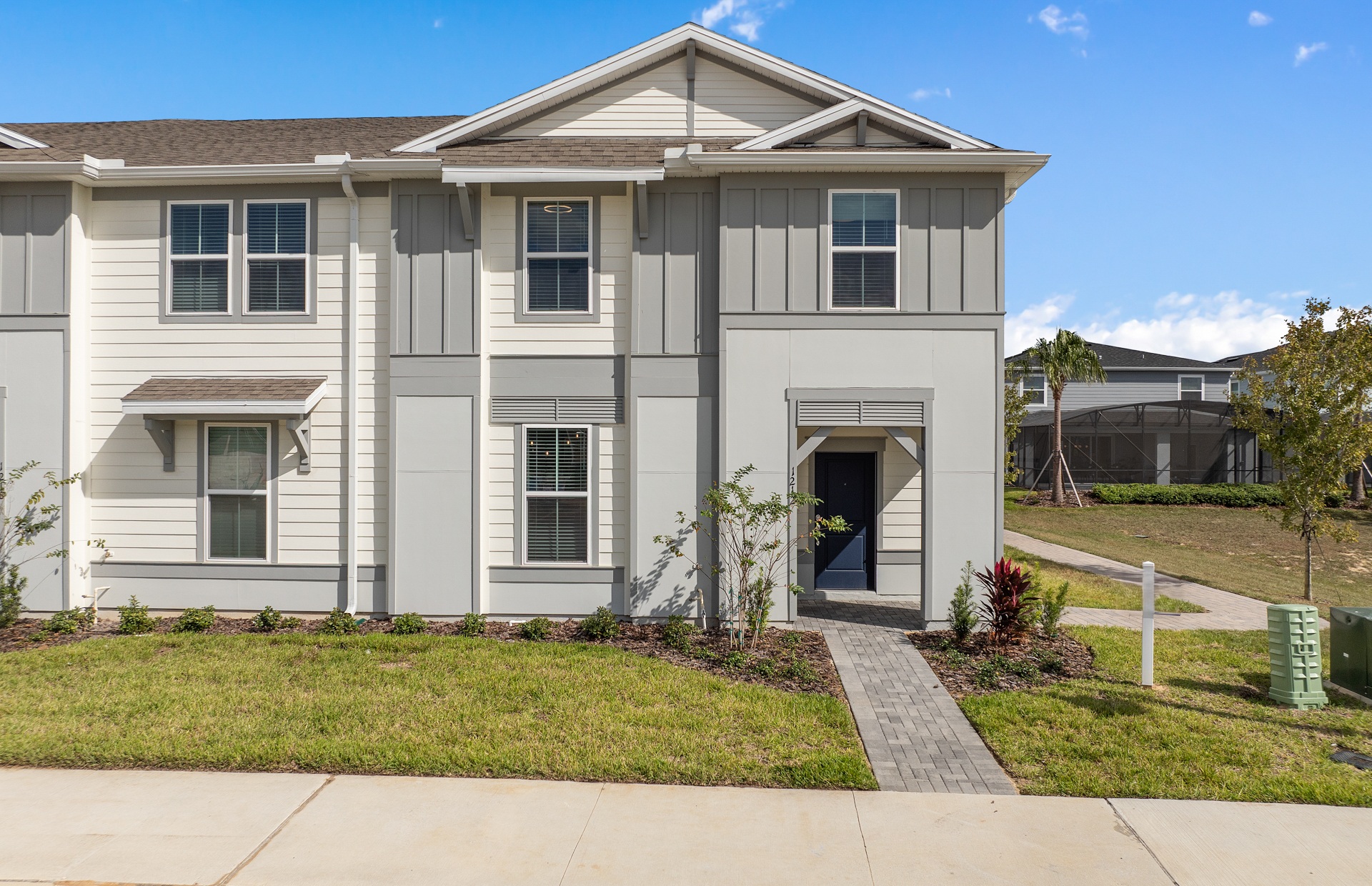
Protecting wealth in U.S. dollars means allocating part of an investor’s capital to assets whose value, income or principal is denominated in or connected to the American currency.
The objective is not necessarily to move every asset outside the investor’s home country.
The objective is to reduce excessive dependence on one:
- Local currency;
- National economy;
- Banking system;
- Property market;
- Political and regulatory environment;
- Source of income.
For Latin American investors, dollar wealth protection may involve:
- Eligible dollar bank deposits;
- U.S. Treasury securities;
- International stocks and diversified funds;
- Publicly traded real estate investment trusts;
- Direct U.S. real estate;
- International businesses or other productive assets.
Each category has different levels of liquidity, volatility, income, control, taxation and operational responsibility.
Direct U.S. real estate may support a dollar wealth-protection strategy because it combines a physical asset, potential rental income, geographic diversification and potential long-term appreciation.
It does not guarantee protection from inflation, currency changes, vacancy, declining property values, unexpected expenses or financial loss.
This guide explains how U.S. real estate may help protect wealth in dollars, how it compares with other dollar assets and which legal, financial, tax and operational risks must be evaluated before purchasing.
Direct answer: U.S. real estate may help protect part of a Latin American investor’s wealth by placing capital in a physical dollar-denominated asset that may generate rental income. Protection is not automatic. The property must be purchased at an appropriate price, produce sustainable net income, remain financially manageable during vacancy and fit within a diversified portfolio.
What Does Protecting Wealth in Dollars Mean?
Dollar wealth protection is a strategy designed to preserve part of an investor’s purchasing power through assets connected to the U.S. dollar.
It may reduce dependence on:
- Domestic inflation;
- Depreciation of the investor’s local currency;
- One national economic cycle;
- One local financial system;
- Domestic property-market conditions.
The strategy does not mean that the dollar, U.S. securities or U.S. property cannot lose value.
Protection should be measured by the investor’s ability to preserve purchasing power after:
- Inflation;
- Taxes;
- Investment expenses;
- Currency conversion;
- Property operating costs;
- Future sale expenses.
Wealth Protection Is Different From Speculation
Speculation generally depends on predicting a rapid change in price or currency value.
A dollar wealth-protection strategy should not require:
- The dollar to appreciate immediately;
- Property prices to rise every year;
- Rental income to remain fully occupied;
- Interest rates to decline;
- A future refinance;
- A quick property sale.
The strategy should remain financially manageable even when:
- The dollar weakens against the investor’s home currency;
- The property does not appreciate;
- Rental income is temporarily interrupted;
- Insurance and property expenses increase;
- The investment must be held longer than expected.
Dollar Protection Is Different From Asset Dollarization
The two concepts are related but not identical.
Asset dollarization is the process of reallocating part of an investor’s wealth from local-currency assets into assets denominated in or connected to the U.S. dollar.
Dollar wealth protection is the broader objective of preserving purchasing power, reducing currency concentration and creating financial exposure outside one domestic system.
Dollarization describes an allocation process.
Wealth protection describes the intended financial outcome.
An investor can dollarize capital without protecting it effectively.
For example, moving every available resource into one overpriced U.S. property creates dollar exposure but also concentrates the investor in:
- One property;
- One city;
- One tenant or guest market;
- One property manager;
- One illiquid asset.
A dedicated guide to asset dollarization should be used to understand the complete reallocation process.
Why the U.S. Dollar Is Used in International Wealth Strategies
The U.S. dollar maintains an important role in global investment, trade, payments, funding and official reserves.
The Federal Reserve attributes this role in part to:
- The size of the U.S. economy;
- The depth and liquidity of U.S. financial markets;
- Openness to capital flows;
- The supply of dollar-denominated assets;
- Property rights and rule-of-law institutions.
Review the official Federal Reserve analysis of the international role of the U.S. dollar.
The International Monetary Fund also tracks the currency composition of official foreign-exchange reserves through its COFER dataset.
Review the official IMF Currency Composition of Official Foreign Exchange Reserves dataset.
The dollar’s international role does not mean that every dollar asset is safe.
A poorly managed company, concentrated fund, uninsured account or overpriced property can decline substantially even when it is valued in dollars.
What Is a Dollar-Denominated Asset?
A dollar-denominated asset is an asset whose value, account balance, contractual principal, market price or income is expressed in U.S. dollars.
Examples include:
- A dollar bank deposit;
- A U.S. Treasury security;
- A U.S.-listed stock or fund;
- A publicly traded REIT;
- U.S. real estate;
- An interest in an eligible U.S. company.
The dollar denomination describes the currency of measurement.
It does not describe the asset’s quality, liquidity, profitability or legal suitability.
Five Ways U.S. Real Estate May Support Dollar Wealth Protection
1. Ownership of a Physical Dollar-Denominated Asset
A U.S. property is normally purchased, valued, rented, financed and sold in dollars.
The investor owns a physical asset connected to a specific:
- Parcel of land;
- Building;
- Neighborhood;
- City;
- Local property market.
Its value may be influenced by:
- Local housing demand;
- Employment;
- Population and household growth;
- Construction costs;
- Housing supply;
- Financing conditions;
- Property condition;
- Insurance availability;
- Rental regulations.
A physical asset may provide protection against certain forms of financial-system concentration.
It remains exposed to property-market, legal, insurance, maintenance and liquidity risks.
2. Potential Rental Income in Dollars
A U.S. rental property may generate recurring income in dollars.
The income may be used to:
- Pay property expenses;
- Pay financing obligations;
- Maintain operating reserves;
- Fund improvements;
- Reinvest in other assets;
- Transfer eligible proceeds to the investor’s home country.
Rental income is not guaranteed.
The amount available to the owner is calculated after deducting:
- Vacancy;
- Property management;
- Property taxes;
- Insurance;
- Association fees;
- Maintenance;
- Repairs;
- Utilities;
- Licensing and rental taxes;
- Professional services;
- Financing payments;
- Capital reserves.
3. Potential Long-Term Property Appreciation
Property values may increase over time because of:
- Housing demand;
- Limited land or construction;
- Employment growth;
- Infrastructure;
- Property improvements;
- Inflation in construction and replacement costs.
Appreciation is not automatic.
The Federal Housing Finance Agency reported that national U.S. house prices increased 1.7% between the first quarter of 2025 and the first quarter of 2026.
During that period:
- Prices rose in 42 states;
- Prices declined in eight states and the District of Columbia;
- Only 65 of the 100 largest metropolitan areas recorded annual increases.
Review the official FHFA House Price Index report for the first quarter of 2026.
The national result demonstrates that property prices can grow more slowly than inflation and can decline in individual markets.
4. Potential Use of Fixed-Rate Financing
Fixed-rate financing may allow the investor to acquire a property while preserving part of the available capital.
The scheduled principal-and-interest payment generally remains stable during the fixed-rate period.
If rent increases while the principal-and-interest payment remains stable, the relative burden of the financing may decline.
The complete monthly property cost can still increase because of:
- Property taxes;
- Insurance;
- Association fees;
- Maintenance;
- Management;
- Utilities;
- Special assessments.
Financing increases risk when rental income is interrupted.
The mortgage must continue to be paid during vacancy, repairs or regulatory problems.
5. Geographic and Economic Diversification
Owning U.S. real estate can reduce complete dependence on the investor’s domestic economy.
The property may be influenced by:
- U.S. employment and population trends;
- Local housing supply;
- U.S. interest rates;
- U.S. inflation;
- Local rental demand;
- U.S. property and tax rules.
This creates different exposure rather than eliminating risk.
The investor replaces part of the domestic exposure with U.S. currency, property, tax and regulatory exposure.
U.S. Real Estate Is Not Directly Indexed to Inflation
U.S. inflation was 3.5% during the 12 months ending in June 2026, according to the Bureau of Labor Statistics.
During the same 12-month period:
- The shelter component increased 3.3%;
- Rent of primary residence increased 2.8%;
- The index excluding food and energy increased 2.6%.
Review the official U.S. Bureau of Labor Statistics Consumer Price Index.
Real estate does not contain a contractual mechanism requiring its value or rent to increase with inflation.
Prices and rents depend on market conditions.
TIPS Have Explicit Inflation Adjustment
Treasury Inflation-Protected Securities are designed with a principal amount that adjusts according to U.S. inflation or deflation under the applicable rules.
TreasuryDirect states that TIPS are issued with terms of 5, 10 or 30 years.
At maturity, the investor receives the inflation-adjusted principal or the original principal, whichever is greater under the applicable structure.
Review the official TreasuryDirect TIPS guidance.
A property may provide rent, control and potential appreciation, but it does not have the same explicit inflation-adjustment mechanism.
Protecting Wealth Requires Measuring Real Return
Nominal Return
Nominal return is the investment gain before inflation is considered.
Real Return
Real return measures the investment result after inflation.
A simplified estimate is:
Approximate real return = nominal return − inflation
A more precise calculation is:
Real return = ((1 + nominal return) ÷ (1 + inflation rate)) − 1
Illustrative Example
Assume a property investment produces an 8% nominal total return during a period of 3.5% inflation.
((1.08 ÷ 1.035) − 1) × 100 = approximately 4.35%
The approximate real return would be 4.35% before investor-specific taxes and other adjustments.
If the same investment produced a 2% nominal return:
((1.02 ÷ 1.035) − 1) × 100 = approximately -1.45%
The investment increased in nominal terms but lost purchasing power.
These examples are educational and do not represent the performance of a particular property.
Currency Protection Is Not the Same as Investment Protection
A U.S. property has two separate components:
- The performance of the property in dollars;
- The change in the exchange rate between the dollar and the investor’s home currency.
The property can:
- Increase in dollar value while the dollar weakens;
- Decline in dollar value while the dollar strengthens;
- Remain stable in dollars while changing substantially in local-currency value;
- Generate rental income while losing market value.
Illustrative Currency Example
Assume a U.S. property is worth $400,000.
At an exchange rate of five local-currency units per dollar:
$400,000 × 5 = 2,000,000 local-currency units
At six units per dollar:
$400,000 × 6 = 2,400,000 local-currency units
At four units per dollar:
$400,000 × 4 = 1,600,000 local-currency units
The dollar value remained unchanged, but the local-currency equivalent changed substantially.
A Stronger Dollar Can Also Increase Expenses
A stronger dollar may increase the local-currency value of the property and rent.
It can also increase the local-currency cost of:
- The down payment;
- Repairs;
- Furniture;
- Mortgage contributions;
- Insurance deductibles;
- Additional capital sent to the property.
An investor should maintain part of the operating reserve in the same currency as the property’s expenses.
U.S. Real Estate Compared With Other Dollar Assets
| Asset | Liquidity | Potential Income | Physical Ownership | Operational Responsibility |
|---|---|---|---|---|
| Eligible dollar bank deposit | Generally high | Interest | No | Low |
| U.S. Treasury security | Generally high | Interest or maturity value | No | Low |
| Diversified ETF | Generally high | Potential distributions and appreciation | No | Low |
| Publicly traded REIT | Generally high | Potential distributions | No direct title to a specific property | Low |
| Fractional real estate | Generally limited | Potential property distributions | Depends on legal structure | Low to moderate |
| Direct U.S. real estate | Low | Potential rental income | Yes | Moderate to high |
No category is universally superior.
The appropriate combination depends on:
- The purpose of the capital;
- Required liquidity;
- Investment horizon;
- Risk capacity;
- Need for income;
- Desire for control;
- Tax residence;
- Existing asset concentration.
Dollar Bank Deposits
A dollar bank account may support:
- Short-term liquidity;
- Future dollar expenses;
- Property operating reserves;
- Rental income collection;
- Mortgage and property-expense payments.
The Federal Deposit Insurance Corporation generally protects eligible deposits up to $250,000 per depositor, per FDIC-insured bank, for each ownership category.
Review the official FDIC deposit insurance guidance.
FDIC insurance does not automatically protect:
- Stocks;
- Bonds;
- ETFs;
- Mutual funds;
- Crypto assets;
- Insurance products;
- Property investments.
A dollar bank balance may preserve liquidity while losing purchasing power when interest earned is below inflation.
U.S. Treasury Securities
U.S. Treasury securities may provide:
- A defined maturity;
- Dollar denomination;
- Potential interest income;
- Greater liquidity than direct property;
- Several maturity alternatives.
Potential risks include:
- Market-price changes before maturity;
- Interest-rate risk;
- Inflation risk for securities without inflation adjustment;
- Currency risk;
- Tax and custody considerations;
- Reinvestment risk.
Review the official TreasuryDirect marketable securities guide.
Diversified Funds and ETFs
Funds may provide exposure to:
- Several companies;
- Several industries;
- Bonds;
- Real estate securities;
- Multiple countries;
- Specific investment strategies.
Potential advantages include daily liquidity and reduced dependence on one company or property.
Potential risks include:
- Market volatility;
- Fund expenses;
- Concentration inside the portfolio;
- Tracking differences;
- Currency movements;
- Complex leveraged or inverse strategies.
Holding several funds does not guarantee diversification when they contain the same underlying securities.
Publicly Traded REITs
A publicly traded REIT may provide liquid exposure to portfolios containing:
- Apartments;
- Industrial properties;
- Healthcare facilities;
- Hotels;
- Self-storage;
- Data centers;
- Other real estate categories.
Potential advantages include:
- Lower entry capital than direct property;
- Exposure to several properties;
- Professional management;
- Potential distributions;
- Market liquidity.
Potential risks include:
- Share-price volatility;
- Interest-rate sensitivity;
- Debt and refinancing risk;
- Sector concentration;
- Distribution reductions;
- No direct control of a particular property.
When Direct U.S. Real Estate May Fit the Strategy
Direct property may be appropriate when the investor:
- Can maintain a multiyear holding period;
- Has capital beyond the purchase amount;
- Can maintain adequate dollar reserves;
- Accepts limited liquidity;
- Understands property-specific risk;
- Values physical ownership;
- Can establish professional management;
- Has organized cross-border tax and succession planning.
When Direct Property May Be Less Appropriate
Direct property may be unsuitable when the investor:
- Needs the capital in the short term;
- Has no emergency reserve;
- Would invest almost all available wealth in one address;
- Cannot absorb vacancy or major repairs;
- Requires daily liquidity;
- Does not want management responsibility;
- Depends on immediate property appreciation;
- Has not analyzed taxation in every relevant country.
Select the Property According to the Protection Objective
A wealth-protection property should be selected for sustainable fundamentals rather than promotional return projections.
Supported Rental Demand
Analyze:
- Employment;
- Population and household formation;
- Tenant profile;
- Rental vacancy;
- Current comparable rent;
- Competing inventory;
- Future housing supply.
Manageable Ownership Expenses
Review:
- Property taxes;
- Insurance;
- Association fees;
- Maintenance;
- Management;
- Utilities;
- Capital replacements.
Broad Future Resale Demand
A property may have stronger resale flexibility when it can appeal to:
- Owner-occupants;
- Local investors;
- International investors;
- Second-home buyers;
- Different rental strategies when legally permitted.
Appropriate Property Condition
Investigate:
- Roof;
- Foundation and structure;
- Electrical and plumbing systems;
- Heating and air conditioning;
- Water intrusion;
- Permits;
- Insurance eligibility;
- Future replacement needs.
Long-Term, Medium-Term or Short-Term Rental?
Long-Term Rental
Potential advantages include:
- More predictable scheduled income;
- Lower tenant turnover;
- Lower furnishing and cleaning expenses;
- Reduced dependence on tourism;
- Lower operational intensity.
Potential risks include tenant nonpayment, vacancy, maintenance and lease-enforcement expenses.
Medium-Term Furnished Rental
Potential occupants may include:
- Traveling professionals;
- Corporate employees;
- Relocating families;
- Seasonal residents;
- Students;
- Temporary healthcare workers.
This strategy generally requires furniture, utilities, internet, cleaning and more frequent marketing.
Short-Term Rental
Potential advantages include pricing flexibility and higher gross revenue during strong demand periods.
Potential costs and risks include:
- Seasonality;
- Variable occupancy;
- Furniture and supplies;
- Cleaning and laundry;
- Utilities;
- Platform charges;
- Licensing and lodging taxes;
- Local zoning;
- Association restrictions;
- Higher management intensity.
The strategy with the highest gross revenue does not necessarily provide the strongest wealth protection.
Calculate Net Income, Not Advertised Revenue
Gross rental income is the amount scheduled or collected before expenses.
Net operating income is generally calculated as:
Net operating income = gross operating income − operating expenses
Pre-tax cash flow may be calculated as:
Pre-tax cash flow = net operating income − financing payments
Illustrative Rental Analysis
Assume a U.S. property produces $36,000 in scheduled annual rent.
| Category | Illustrative Annual Amount |
|---|---|
| Scheduled gross rent | $36,000 |
| Vacancy allowance | -$1,800 |
| Property management | -$3,600 |
| Property taxes | -$5,400 |
| Insurance | -$3,800 |
| Association fees | -$1,800 |
| Maintenance and capital reserves | -$3,500 |
| Illustrative net operating income | $16,100 |
| Annual financing payments | -$14,400 |
| Illustrative pre-tax cash flow | $1,700 |
The property produces substantial gross revenue while generating limited pre-tax cash flow after expenses and financing.
The example excludes investor-specific taxes, major unexpected repairs, currency conversion and future sale costs.
It does not represent a projection for a particular property.
Important Property Metrics
Gross Rental Yield
Gross rental yield = annual gross rent ÷ property price × 100
This excludes every property expense and financing payment.
Capitalization Rate
Capitalization rate = net operating income ÷ property value × 100
Cash-on-Cash Return
Cash-on-cash return = annual pre-tax cash flow ÷ total cash invested × 100
Debt Service Coverage Ratio
Debt service coverage ratio = net operating income ÷ annual debt service
Break-Even Occupancy
Break-even occupancy = total property expenses ÷ potential gross rental income × 100
No individual metric should be used alone.
Cash Purchase or Financing?
Potential Advantages of Cash
- No mortgage qualification;
- No monthly mortgage payment;
- No mortgage interest;
- Fewer lender-required documents;
- Potentially faster closing;
- Reduced foreclosure risk.
Potential Limitations of Cash
- Greater concentration of capital;
- Reduced liquidity;
- Less capital available for diversification;
- Need to convert a larger amount into dollars;
- Opportunity cost.
Potential Advantages of Financing
- Preservation of part of the investor’s liquidity;
- Capital retained for repairs and reserves;
- Potential ability to diversify among more assets;
- Fixed principal-and-interest payments under qualifying loan terms.
Financing Risks
- Interest and lender expenses;
- Monthly payments during vacancy;
- Prepayment penalties;
- Adjustable rates;
- Balloon payments;
- Refinancing requirements;
- Foreclosure after default.
Financing should not be used solely because the investor expects inflation, rent or property values to increase.
Maintain Dollar Operating Reserves
A wealth-protection strategy can fail when the investor is forced to sell the property or convert currency during an unfavorable period.
Dollar reserves may be needed for:
- Mortgage payments during vacancy;
- Insurance deductibles;
- Roof replacement;
- Heating and air-conditioning replacement;
- Plumbing and electrical repairs;
- Appliance replacement;
- Association assessments;
- Property-tax increases;
- Legal and accounting expenses;
- Unexpected travel.
The reserve should reflect the property, loan, rental model and investor’s capacity to provide additional capital.
Do Not Invest Every Available Resource in One Property
Investor.gov explains that diversification involves spreading capital among different investments to reduce concentration risk.
Diversification cannot guarantee protection from market losses.
Review the official Investor.gov diversification guidance.
Purchasing one U.S. property may reduce domestic concentration while creating new concentration in:
- One city;
- One property type;
- One tenant or guest market;
- One manager;
- One insurance market;
- One illiquid asset.
Dollar wealth protection should normally combine liquidity, diversification and an appropriate allocation rather than depend on one property.
Selecting the Ownership Structure
Potential ownership alternatives include:
- Individual ownership;
- A single-member LLC;
- A multimember LLC;
- A partnership;
- A corporation;
- A trust;
- Another estate-planning structure.
No structure is automatically appropriate for every Latin American investor.
The decision may affect:
- Liability;
- Mortgage eligibility;
- Federal and state filings;
- Rental-income taxation;
- Banking;
- Accounting;
- FIRPTA;
- Estate planning;
- Home-country reporting.
An LLC Does Not Automatically Protect the Investment
An LLC does not automatically:
- Eliminate income tax;
- Eliminate personal liability;
- Prevent property-value loss;
- Guarantee rental income;
- Eliminate FIRPTA;
- Eliminate estate-tax exposure;
- Guarantee mortgage approval;
- Remove annual filing requirements;
- Eliminate obligations in the investor’s home country.
The ownership structure should be reviewed before the purchase contract is signed.
U.S. Federal Tax on Rental Income
Rental income from property located in the United States is generally U.S.-source income.
The Internal Revenue Service explains that a nonresident alien who holds U.S. real property for income production may elect under Internal Revenue Code Section 871(d) to treat the property income as effectively connected income.
When a valid and timely election and tax filing apply, deductions attributable to the real property income may generally be claimed and net income may be taxed at applicable graduated rates.
The election generally applies to all qualifying U.S. real property income and remains effective for later years unless properly revoked.
Review the official IRS guidance for nonresident owners of U.S. real property.
Potential Property Expenses
Depending on the tax treatment and documentation, expenses may include:
- Property management;
- Mortgage interest;
- Property taxes;
- Insurance;
- Association fees;
- Repairs;
- Advertising;
- Professional services;
- Depreciation.
Tax deductions do not eliminate the economic expense.
An insurance premium or repair still reduces the property’s available cash even when it receives tax treatment as an eligible expense.
FIRPTA When the Property Is Sold
When a foreign person disposes of a U.S. real property interest, FIRPTA withholding may apply.
The general withholding rate is commonly 15% of the amount realized, subject to exceptions and specialized procedures.
FIRPTA withholding is not necessarily the seller’s final federal income tax.
The seller generally files the applicable return, calculates the actual tax and claims credit for eligible withholding.
Review the official IRS FIRPTA guidance.
Illustrative FIRPTA Calculation
Assume a foreign investor sells a U.S. property for $600,000 and the general 15% withholding applies.
$600,000 × 15% = $90,000
The calculation does not mean the final federal tax is necessarily $90,000.
The investor should include withholding, sale expenses and the time required to file for any eligible refund when planning the exit.
U.S. Estate and Succession Risk
U.S.-situated property owned by a nonresident who is not a U.S. citizen may create estate-tax and filing considerations.
The IRS states that U.S.-situated assets can include real estate, securities, business interests and other property, depending on the facts and applicable rules.
When applicable U.S.-situated assets and adjusted taxable gifts exceed the $60,000 filing threshold, an executor may be required to file Form 706-NA.
The filing threshold does not mean that every estate will owe the same tax or that no planning alternatives exist.
Review the official IRS estate-tax guidance for nonresident noncitizens.
The investor should determine:
- Who inherits the property;
- Whether probate may be required;
- Who operates the property during incapacity or death;
- How mortgage and property expenses will continue;
- How an entity interest will be transferred;
- How inheritance will be treated in the home country.
Tax and Reporting in the Investor’s Home Country
U.S. tax compliance does not automatically complete obligations in the investor’s country of tax residence.
Home-country obligations may involve:
- Foreign real estate;
- Foreign bank accounts;
- Rental income;
- Foreign entities;
- Capital gains;
- Taxes paid or withheld in the United States;
- Foreign-asset declarations;
- Inheritance and succession.
The rules differ among Mexico, Colombia, Argentina, Brazil, Chile, Peru and other countries.
Do not assume that:
- Keeping the money in the United States prevents home-country taxation;
- An LLC eliminates reporting;
- Tax paid in the United States automatically offsets all domestic tax;
- The property must be reported only when it is sold.
Managing the Property Remotely
A professional property manager may coordinate:
- Rental pricing;
- Advertising;
- Tenant or guest screening;
- Lease or reservation administration;
- Rent collection;
- Maintenance;
- Property inspections;
- Emergency response;
- Monthly owner statements;
- Year-end financial records.
Review the Complete Management Agreement
Potential charges include:
- Monthly management fee;
- Tenant-placement fee;
- Lease-renewal fee;
- Inspection charge;
- Maintenance coordination fee;
- Contractor markup;
- Advertising charge;
- Contract termination fee.
Maintain Independent Owner Control
The owner should retain direct access to:
- Recorded deed;
- Bank statements;
- Insurance policy;
- Mortgage documents;
- Association records;
- Leases;
- Management statements;
- Repair invoices;
- Tax returns;
- Entity documents.
Protecting wealth should not require giving one property manager control of every financial and legal record.
Protect International Transfers From Fraud
Before sending a deposit, down payment or closing funds:
- Confirm the recipient’s legal name;
- Confirm the bank and account number independently;
- Call the title or closing company using a verified telephone number;
- Do not depend only on emailed instructions;
- Question every last-minute account change;
- Confirm receipt immediately after sending the transfer.
A loss caused by wire fraud may be immediate and difficult to recover.
Stress-Test the Wealth-Protection Strategy
Base Scenario
- Rent supported by comparable properties;
- Normal vacancy;
- Written insurance quote;
- Estimated future property taxes;
- Current management and association fees;
- Routine maintenance;
- Current financing terms;
- No assumed currency gain.
Conservative Scenario
- Rent 5% below projection;
- Higher vacancy;
- Insurance 15% higher;
- Property taxes increasing;
- Additional maintenance;
- No appreciation;
- No favorable exchange-rate movement.
Downside Scenario
- Rent 10% below projection;
- Several months without income;
- A major repair;
- Association special assessment;
- Property value declining;
- Investor’s home currency strengthening against the dollar;
- Higher financing costs;
- Sale taking longer than expected.
A property intended for wealth protection should remain financially manageable during reasonable periods of underperformance.
Step-by-Step Dollar Wealth-Protection Framework
- Map the current wealth: identify assets by country, currency, institution and liquidity.
- Identify concentration: measure dependence on the local currency and economy.
- Define the objective: purchasing-power preservation, income, diversification or personal use.
- Preserve emergency liquidity: separate essential short-term capital from the investment.
- Compare dollar assets: evaluate deposits, Treasuries, funds, REITs and direct real estate.
- Determine an appropriate allocation: avoid placing all international capital in one property.
- Establish the complete property budget: include purchase, closing, repairs and reserves.
- Review cash and financing: compare complete written costs and downside risks.
- Select the market: analyze employment, housing supply, rent, taxes, insurance and resale demand.
- Select the property: prioritize supported demand and manageable ownership expenses.
- Verify net income: deduct every realistic expense.
- Stress-test the investment: model vacancy, lower rent and higher costs.
- Select the ownership structure: coordinate U.S. and home-country professionals.
- Complete due diligence: inspect the property and review title, insurance, permits and associations.
- Establish dollar reserves: maintain funds for mortgage payments and major expenses.
- Create the management system: require financial reporting and independent owner access.
- Complete tax compliance: organize U.S. and home-country filings.
- Plan succession: determine what happens after death or incapacity.
- Plan the exit: estimate timing, brokerage, closing costs, tax, FIRPTA and currency conversion.
- Review annually: measure the property’s real return and portfolio concentration.
Annual Wealth-Protection Review
At least once each year, evaluate:
- Property value in dollars;
- Property value in the investor’s home currency;
- Gross rental income;
- Net operating income;
- Pre-tax cash flow;
- Vacancy;
- Insurance and property-tax changes;
- Maintenance history;
- Mortgage balance;
- Dollar operating reserves;
- Real return after inflation;
- U.S. tax compliance;
- Home-country reporting;
- Portfolio concentration;
- Estimated future sale proceeds.
Common Mistakes
- Believing every dollar asset is safe;
- Assuming the dollar always appreciates;
- Confusing dollarization with diversification;
- Moving every available resource into one property;
- Using emergency savings for an illiquid investment;
- Assuming U.S. real estate always exceeds inflation;
- Depending on appreciation to make the property financially viable;
- Using gross rental income as profit;
- Ignoring vacancy and maintenance reserves;
- Assuming rent will always cover the mortgage;
- Selecting a market only because it is popular among Latin Americans;
- Relying only on seller or developer projections;
- Creating an LLC without cross-border analysis;
- Ignoring insurance, flooding and association assessments;
- Allowing one manager to control every document and account;
- Ignoring U.S. federal tax filings;
- Ignoring home-country tax reporting;
- Learning about FIRPTA only when selling;
- Failing to organize succession planning;
- Sending money using unverified banking instructions.
Frequently Asked Questions
What does protecting wealth in dollars mean?
It means placing part of an investor’s wealth in assets whose value or income is connected to the U.S. dollar to reduce excessive dependence on one domestic currency and economy.
Does dollar wealth protection mean moving all assets abroad?
No. Moving every asset abroad can create liquidity, currency, tax and concentration risks. The appropriate allocation depends on the investor’s circumstances.
Is protecting wealth in dollars the same as dollarization?
No. Dollarization is the process of moving capital into dollar-connected assets. Dollar wealth protection is the broader objective of preserving purchasing power and reducing concentration.
Why is the U.S. dollar used for international wealth protection?
The dollar is widely used in international investment, payments, trade and official reserves. Its global role does not guarantee the safety of every dollar-denominated investment.
Is every dollar investment safe?
No. Dollar bank accounts, securities, funds, businesses and properties have different risks. Dollar denomination does not prevent loss.
Can U.S. real estate protect wealth from inflation?
It may help through potential rent adjustments, property appreciation, fixed-rate financing and dollar exposure. None of these mechanisms is guaranteed.
Do U.S. property prices always exceed inflation?
No. National and local property prices can increase more slowly than inflation or decline.
Is real estate directly linked to inflation?
No. Property values and rents depend on market conditions. TIPS have a more explicit contractual inflation-adjustment mechanism.
Does rental income protect purchasing power?
Rental income may contribute to purchasing-power protection when it adjusts over time and produces sustainable net income. Property expenses may also increase.
What is the difference between gross and net rent?
Gross rent is collected before expenses. Net income remains after vacancy, management, taxes, insurance, association fees, maintenance and other property costs.
Can rental income pay the entire mortgage?
It may in some properties, but it is not guaranteed. Operating expenses must be deducted before comparing net operating income with financing payments.
Is buying property the same as buying dollars?
No. Property combines currency exposure with the risks and potential returns of one physical real estate asset.
What happens when the dollar weakens?
The property may retain its dollar value while its local-currency equivalent declines. The investor should evaluate the result in both currencies.
Should all operating reserves be kept in dollars?
Funds intended to pay U.S. property expenses may benefit from being held in dollars, subject to banking, liquidity, tax and deposit-protection considerations.
Is a U.S. bank account protected?
Eligible deposits at an FDIC-insured bank are generally covered up to applicable limits per depositor, bank and account ownership category. Investments are not automatically FDIC-insured.
Is a Treasury security better than real estate?
Neither is universally better. Treasury securities generally provide greater liquidity and defined terms. Real estate may provide rent, physical ownership and control while requiring more capital and management.
Is a REIT the same as owning property?
No. A REIT is generally a security connected to a portfolio of real estate. Direct property gives the investor title to a specific asset.
How much should be invested in U.S. real estate?
There is no universal percentage. The decision depends on total wealth, emergency reserves, existing exposure, future expenses, tax residence, horizon and risk capacity.
Does an LLC guarantee asset protection?
No. An LLC may provide legal or administrative benefits in some circumstances but does not guarantee liability protection, tax savings, income or property appreciation.
Do foreign owners pay U.S. tax on rental income?
Yes. U.S. rental property can create federal tax and filing obligations. Treatment depends on the owner, structure, elections, income and documentation.
What is FIRPTA?
FIRPTA generally requires withholding when a foreign person disposes of a U.S. real property interest.
Is FIRPTA the final tax?
Not necessarily. FIRPTA generally operates as withholding. The seller calculates the applicable federal tax on the required return and claims credit for eligible withholding.
Can U.S. estate tax affect a Latin American owner?
U.S.-situated property owned by a nonresident noncitizen can create estate-tax and filing considerations depending on the ownership and individual circumstances.
Must the investment be reported in the home country?
Foreign property, income, accounts, entities and gains may create reporting or tax obligations in the investor’s country of tax residence.
What is the greatest wealth-protection mistake?
The greatest mistake is replacing domestic concentration with concentration in one foreign currency, property, city or financial institution.
Protect Wealth Through Structure, Not Promises
U.S. real estate may support a dollar wealth-protection strategy through:
- A physical dollar-denominated asset;
- Potential rental income;
- Potential long-term appreciation;
- Financing alternatives;
- Geographic diversification;
- Direct ownership and control.
These characteristics do not make property risk-free.
The property must remain financially manageable after:
- Vacancy;
- Management;
- Property taxes;
- Insurance;
- Maintenance;
- Association fees;
- Financing;
- U.S. and home-country taxes;
- Inflation;
- Currency movements;
- Future sale expenses.
The strongest wealth-protection strategy does not depend on a promise that the dollar, property prices or rent will always rise.
It depends on diversification, appropriate liquidity, disciplined property selection, conservative financial analysis, dollar reserves, professional management and cross-border compliance.
For the complete international acquisition process, review How to Invest in U.S. Real Estate from Latin America.
For a comparison of investment categories, review Where Should I Invest My Money in 2026?.
For a beginner’s acquisition framework, review How to Start Investing in U.S. Real Estate.
As the content cluster expands, this article should also link to the dedicated guide about asset dollarization and the Florida real estate opportunity analysis.
Buldora helps Latin American investors understand how U.S. real estate may fit within a broader dollar wealth-protection strategy, compare markets, calculate complete property scenarios and coordinate the process with qualified professionals.
Start your dollar wealth-protection analysis with Buldora
About the Author
Raphaela Banks is Co-Founder and Global Real Estate Strategist at Buldora Invest. She develops strategies and educational content to help international investors understand real estate opportunities in the United States, Brazil and Dubai.
Sources and References
This article was researched using official central-bank, international reserve, inflation, housing, investor education, deposit insurance, Treasury and federal tax resources. Currency rates, inflation, property values, taxes, insurance, financing and legal requirements may change after publication.
- Federal Reserve — The International Role of the U.S. Dollar
- International Monetary Fund — Currency Composition of Official Foreign Exchange Reserves
- U.S. Bureau of Labor Statistics — Consumer Price Index
- Federal Housing Finance Agency — House Price Index, First Quarter 2026
- Investor.gov — Diversify Your Investments
- Investor.gov — Asset Allocation and Diversification
- Federal Deposit Insurance Corporation — Understanding Deposit Insurance
- U.S. Department of the Treasury — Marketable Treasury Securities
- U.S. Department of the Treasury — Treasury Inflation-Protected Securities
- Internal Revenue Service — Nonresident Aliens and U.S. Real Property
- Internal Revenue Service — Publication 527, Residential Rental Property
- Internal Revenue Service — FIRPTA Withholding
- Internal Revenue Service — Estate Tax for Nonresident Noncitizens
This article is provided for general informational and educational purposes only. It does not constitute individualized legal, tax, accounting, immigration, securities, banking, currency, estate-planning, lending, insurance, financial, property-management or investment advice. U.S. real estate and dollar-denominated assets do not guarantee protection from inflation, currency changes, vacancy, declining market values, taxation, financing default or financial loss. Suitability depends on the investor’s legal capacity, tax residence, financial circumstances, liquidity, objectives, ownership structure, jurisdiction and risk capacity. Investors should consult appropriately qualified professionals before transferring capital, opening accounts, forming entities, financing or purchasing property.